Fishy!

Sunday, October 26, 2008

Somthing that my uncle wrote months back for THE ASSAM TRIBUNE... he is a senior sub there and I think he is one of the best journalists ever from Assam and the North East of India. But like a typical Assamese he never bothered to venture out of the state... and is so far happy with his job... despite the fact that his bylines are never available on the NET.  Here is something from Vijayanta Sharma Pathak. 

Courtesy www.assamtribune.com


BORN TO DIE

Suicide bombings in Pakistan have became a dime a dozen. The speed at which they have started occurring, especially after the storming of the Lal Masjid, is mind-boggling. The location of these bombings are spread across a diverse area. These attacks point to a high level of preparedness, planning and sophistication. A high degree of radicalization is now evident in the Islamist fold. More extreme constituents are no longer satisfied playing second fiddle to the army and Inter-Services Intelligence (ISI). Rebel groups have time and again crossed parameters the country’s officialdom set for them. Since January, 2007 with the beginning of the Lal Masjid standoff, moderate Islamists who were faithful to the establishment have sought to trigger a more far-reaching shift within Pakistan’s equations of power. The standoff climaxed into a bloody denouncement on July 11 after the army stormed the Lal Masjid Jamia Hafsa complex leaving, according to official estimates, 91 civilians and 11 soldiers dead and 248 persons injured.
 In a swift response to the Lal Masjid assault, attacks by militant groups on the military and state mechanism have increased, especially in the North West Frontier Province (NWFP), Federally Administered Tribal Areas (FATA) and other regions in the country. There has been 197 deaths — 72 civilians and 94 soldiers — between July 11 and 20. Between July 4 and 20, there have been 12 suicide attacks with 155 dead in contrast to ten suicide bombings in Pakistan during January 1 and July 3, 2007 with 112 fatalities. Official count of the dead and injured in the Lal Masjid storming remains challenged by both Islamists and official sources. Leader of Opposition in the National Assembly and secretary-general of the Islamist alliance, Muttahida Majlis-e-Amal Maulana Fazlur Rahman claimed that 1,000 civilians had been killed.


 Jehadi fangs
 Even before the final army assault got under way, Abdul Rashid Ghazi, leader of the resistance in the mosque, claimed that 355 people had been killed inside the complex. That was his last recorded claim. Interior secretary Syed Kamal Shah claimed 75 people had been killed in the complex of which 50-60 were militants and rest women and children. Reports, however, said authorities had asked charity organization Edhi Foundation chief Abdul Sattar Edhi to arrange 800 shrouds. The already rising trend in Islamist extremist violence abruptly surged in the wake of the Lal Masjid assault claiming at least 351 lives in terrorism-related violence across Pakistan in just the first 20 days of July, 2007. Actual numbers may be considerably higher given Islamabad’s penchant for understatements.
 Female students of the Jamia Hafsa Madrassa attached to the Lal Masjid on January 22 occupied a children’s library near their madrassa to protest demolition of seven unauthorized mosques built on roads in Islamabad. President Musharraf often travels along this route and the mosques were dismantled on the advice of his personal security staff. Authorities on February 13 agreed to rebuild one of the mosques to end the standoff. Students, however, refused to withdraw from the library. Female students and their male colleagues from Jamia Faridia, another madrassa linked to the mosque, swooped down on a house nearby on March 27 and kidnapped a woman, her daughter-in-law and her six-month-old granddaughter for allegedly running a brothel. They were allowed to go after they expressed regret.

 Though there’s been no direct engagement or claim by the Al-Qaeda over incidents of retaliation by Islamist extremists. Al-Qaeda leader Ayman-al-Zawahiri called for vengeance in an internet video message posted on July 11. He said “This crime can only be washed away by repentance or blood... If you do not retaliate... Musharraf will not spare any of you.” Zawahiri, unconfirmed reports suggest, may have, in fact, been directing militants inside the Lal Masjid. Laskar-e-Toiba (LET) chief Hafiz Mohammed Sayeed in funeral prayers, attended by about 20,000, at LET-managed Jamia Masjid Al Qadsia in Lahore declared: “This was genocide, hundreds of innocent women and children died... This’s a challenge for all Muslims and Pakistanis... It’s state terrorism, it’s extreme brutality and those who killed the innocent will have a horrible fate.”

 Storm warning

 Some students of the two madrassas on March 28 took three policemen hostage in retaliation for the arrest of some students by police. The hostages were released on March 29. Next day some madrassa students visited CD and video shops in the capital and warned proprietors they should do some other business or face the consequences. The Lal Masjid on April 6 set up its own Sharia court. The mosque’s chief cleric Abdul Aziz warned of tens of thousands of suicide attacks if the government tried to shut down the Lal Masjid. The Sharia court on April 9 issued a fatwa flaying the then tourism minister Nilofer Bakhtiar hugging her French parachuting instructors. This photograph was splashed across newspapers in Pakistan.
 Maulana Fazalullah, pro-Taliban cleric of the Tehreek-e-Nafaz-e-Shariat-e-Mohammadi (TNSM) at Swat in NWFP declared that “the government can’t imagine the repercussion, if any operation was launched against us. We are the people who have defeated Russia. We are the people who have made the lives of the Americans miserable. We can make the lives of Pakistani rulers a hell if they committed the stupidity of attacking us.” The militant commander in Waziristan announced the decision that his cadres would be ready to carry out suicide attacks against the Pakistani Army from north Waziristan to Islamabad. Details were announced over loudspeakers in the region.
 The government on April 10 announced that it had blocked the mosque’s illegal website and radio station. Chaudhury Shujaat Hussain, leader of pro-Musharraf Pakistan Muslim League (Qaide Azam) announced on April 25 that all issues had been settled. Maulana Aziz, however, denied the claim. Some Jamia Faridia students on May 18 kidnapped four policemen in a retaliatory response to the arrest of 11 madrassa students. Prisoners were exchanged after talks. Visiting the mosque on May 20, Chaudhury Shujaat Hussain promised clerics the mosques would be reconstructed but at various places away from the route of travel of President Musharraf. Rejecting his offer, mosque authorities insisted they should be rebuilt at places they existed early on.

 Seconds from doom
 The security situation was rapidly worsening and the government on July 13 moved an army brigade into the Tank district of NWFP. Fuelling speculations that an anti-militant operation was on the cards, the army started despatching troops to the province’s southern districts adjoining Waziristan. The army sent 12,000 troops to Tank and Dera Ismail Khan districts from Okara in Punjab. Troops were also despatched to Lakki Marwat and Bannu districts, strongholds of the local Taliban. Swat and Lower Dir districts were stations where security forces were entrenched even as NWFP province had 35,000 policemen for an approximate population of 21 million.
 Jamia Faridia and Jamia Hafsa students raided a message parlour in Islamabad on June 23. They alleged that the parlour was a brothel and kidnapped nine persons working there, including seven Chinese nationals. While they were allowed to go next day, clerics in the mosque said while they valued friendship with China, they wouldn’t allow even Chinese women to damage morals of Muslims by working as prostitutes. Two days later federal interior minister Aftab Ahmad Khan Sherpao visited Beijing for talks on bilateral cooperation against terror. Media reports said top security guns of the two countries will discuss a list of 22 militants wanted by Beijing. These so-called militants belong to the Islamic Movement of East Turkestan fighting for separation of China’s Sinkiang province.
 Taliban and Al-Qaeda-backed militants in the other besieged region of north Waziristan meanwhile unilaterally nullified their nearly year-old peace pact with the government on July 15. The move came after the expiry of a four-day ultimatum for withdrawal of redeployed troops which militants said was a violation of the peace accord of September 5, 2006. The governing council under the leadership of Hafiz Gul Bahadur ordered fighters to initiate guerrilla attacks on security forces. Islamabad’s policy of non-engagement in the region went awry and 69 people were killed in 21 incidents between July 15 and 22 — government forces early on had repeatedly failed to exercise control over the area.

 For real

 During interior minister Sherpao’s visit to Beijing, which came days after seven Chinese were abducted and released, got a dressing down from the Chinese minister for public security Zhou Yongkang. Zhou described the Lal Masjid vigilantes as terrorists and asked Pakistan to bring the ‘criminals’ to book. Sherpao said Pakistan would take more rigorous action to protect security of Chinese people and organizations in Pakistan. This was wishful thinking because the government hadn’t been able to punish the Waziristan warlord Abdullah Mehsud for abducting Chinese engineers in FATA. Considering the present political context in Pakistan, Mehsud could be more acceptable than Musharraf, who twice survived assassination attempts, in certain regions of the country.
 Intelligence analysts stated before the US House of Representatives Armed Services Committee that bin Laden’s network had become increasingly active in the ungoverned regions of Pakistan along the Afghanistan border. Central Intelligence Agency’s director of intelligence John Kringen declared that “they seem to be fairly-well-settled in the ungoverned spaces of Pakistan. We see more training. We see more money. We see more communications.” President Musharraf had failed to contain Al-Qaeda and must regain power over areas bordering Afghanistan, added President Bush’s National security Adviser Stephen Hadley. Unclassified documents of the US National Intelligence Estimate stated that Al-Qaeda had a safe haven, active operational lieutenants and top leadership. US homeland security secretary Michael Chertoff confessed to a ‘gut feeling’ in the media that America could face another terror attack this summer.
 On his return to Islamabad, Sherpao reported that the Chinese suspected some Uighur students studying in the Lal Majid madrassa as being behind the raid on the massage parlour. The Chinese also felt that Uighur ‘terrorists’ based in Pakistan could pose danger to security of the Olympics in Beijing next year. Sherpao conveyed to Musharraf about the extreme Chinese unhappiness for failure of Pakistani authorities to protect Chinese in the country and inability of police to make headway in the probe into murders of Chinese engineers in Gwadar and FATA by Uighur ‘terrorists’. Musharraf ordered deployment of the Rangers, in the vicinity of Lal Masjid to prevent madrassa students from taking action against Chinese women working in Islamabad’s massage parlours.
 

Closing bell

 General Musharraf himself had been saying that Jaish-e-Mohammad (JEM) had been playing a lead role in the resistance put up by clerics and students in Lal Masjid. Prime Minister Shaukat Aziz’s ministers had also been claiming that some armed ultras of Jamaat-ud-Dawa (JUD), the political arm of LET and Harkat-ul-Jihad-al-Islami (HUJI) were also inside and firing at security forces. Presence of about 20 Sunni extremists of Lashkar-e-Jhangvi (LEJ) was confirmed even as presence of JEM, JUD and HUJI militants was clearly not known. All these organizations are members of International Islamic Front (IIF) formed by bin Laden in 1998.
 While the Rangers took up positions near Lal Masjid on July 2, masjid authorities and madrassa students on July 3 alleged that securitymen were planning to raid the mosque and madrassas. They tried to snatch weapons of Rangers who resisted. Two Rangers were injured when a madrassa student opened fire. One of them died in hospital. There was heavy exchange of fire between Rangers and students inside the mosque premises resulting in loss of about 20 lives. Rangers and students traded fire throughout the day. The government clamped curfew in mosque areas and rushed Special Services Group (SSG), Musharraf’s parent unit, to back the Rangers. An ultimatum to students to vacate hostels and go home was extended twice. Though tension was palpable on July 4, there wasn’t any exchange of fire.
 The 111 Brigade, SSG (trained by the US in the 1980s) and Rangers couldn’t break up the resistance even after six days of a joint military action. A mixed group of women students of Jamia Hafsa, clerics of Lal Masjid led by deputy chief cleric Abdul Rashid Ghazi and LEJ militants kept up the resistance for six days. LEJ extremists were behind much of the violence including the death of a Lt Col of SSG. The Lt Col was leading the SSG contingent involved in the operation. Ghazi and about 40 of his male supporters were killed during a prolonged exchange of fire. A number of jehadis were putting up stiff resistance from the basement where they had taken shelter.

 Final descent
 Operation Silence, the code-name for storming the Lal Masjid was launched by Pakistani security forces at 4 am on July 10 — it took more than 24 hours to overcome the resistance and assume effective control over the complex. Ahead of the raid, security forces had meticulously questioned Maulana Abdul Aziz, head of the masjid and elder brother of deputy chief Maulana Abdul Rashid Ghazi who died. Maulana Aziz was arrested when he tried to escape from the mosque wearing a burqa. Stiff resistance put up by inmates has been sought to be explained by saying that they had vowed to seek martyrdom rather than accept terms laid down by a government which they perceive as acting at US behest. Another explanation is that some high profile jehadi leaders were present in the complex.
 Musharraf himself conceded after the assault that Chinese pressure was key to his decision to use extreme force against radicals hiding in the complex. It’s now clear that Musharraf will have to pay a heavy price for acknowledging direct Chinese pressure. This has put Chinese lives in Pakistan in peril. This may have significant impact on future Chinese role in Pakistan. The US is also abruptly making life difficult for Musharraf by threatening direct interventions on Pakistani soil. National intelligence director Mike McConnel justified direct US military strikes against Pakistan’s tribal belt stating that Osama bin Laden was hiding on Pakistani side of the Afghan-Pak border. He flayed the peace agreement with radicals in Waziristan on grounds that Al-Qaeda had been able to regain some strength with the leadership intact.
 The kind of backlash feared is increased threats to the life of Musharraf from jehadis as well as his own armed forces, particularly tribal soldiers. Most of the girls who died or were injured came from tribal areas and are daughters of serving and retired soldiers of the Pakistani Army. There has been an increasing number of fundamentalists and jehadis in the lower ranks of the military, particularly in the Air Force. The Army, as an institution, is, however, not fundamentalist. It won’t hesitate to drop Musharraf if it perceives that he won’t be able to prevent a jehadi takeover of the country. There could be escalation of terrorist attacks in tribal areas, particularly by TNSM and Jundullah (soldiers of god) type acts of suicide terrorism by angry tribals.

 Enemy within

 Pakistan has sounded a red alert in the wake of reports about presence of 600 suicide bombers within the national capital. It has asked security personnel to avoid gathering in groups and not to wear uniform in public. Pakistan’s federal capital is likely to be hit by more suicide bombings as around 600 suicide bombers are hiding in madrassas and mosques within and around the limits of Islamabad and Rawalpindi, Daily Times quoted officials as saying. Most of these suicide bombers are believed to be those who went missing after the crackdown on Lal Masjid. Sacked chief cleric of the mosque said during interrogation that five to six hundred students of the two madrassas had been trained, equipped and brainwashed to carry suicide attacks.
 When Indira Gandhi decided to storm the Golden Temple in Amritsar in June, 1984, she took responsibility for the decision, right or wrong. She went live on national TV and explained reasons for her decision to the people of India. Musharraf asked Shujat Hussain to explain reasons for the raid to the people keeping an escape route so that if the raid went wrong, he could blame it on civilian political leaders. Another aspect that doesn’t behove a leader of Musharraf’s status is that the Army’s general headquarter (GHQ) gave the impression that the operation was being coordinated by the interior ministry and not the GHQ. It were the army’s elite units that went into action and this faux pas is likely to aggravate the divide between the military and civilian bureaucracy, a defining feature ever since Musharraf seized power in a coup in October, 1999.
 Isn’t Musharraf living on borrowed time?


read more...

Monday, October 20, 2008

United India... sigh!

India is a strange country. We say we are united, and sometime we behave we are. But that always seems to be at our own convenience.

Some cases of unity

1)    Lets say when India beat Pakistan in cricket matches… hockey is not even noticed and football never happens

2)    Lata Mangeshkar’s music, Sachin’s century, Yuvraj’s sixers, Abhinav Bindra’s gold medal, Shah Rukh, Amitabh Bachchan… and some others’ activities have been able transcend beyond religious and linguistic divides.


But for every such case we have almost always had a thousand cases protruding and screaming out why India is not mahaan yet. The recent Marathi and ‘North Indian’ clash… Things reach the heights when MNS and Shiv Sena activities beat up people from UP and Bihar who had come to Mumbai for some railway jobs.


This is somewhat similar to what happened in Assam a few years back when Biharies were bashed up for trying to usurp jobs which some parties believed should be given away to Assamese only. The Maharasthra scenario is of course worse. MNS and Shiv Sena seems to be forever shouting on top of their voices that everyone in Maharashtra should swear by the ‘Me Marathi’ pledge! Every one here seems to be either a north Indian or a south Indian. That brings me to a very interesting observation - something I have come across in my travels across India.


a)    For people in Mumbai, India is consists of North India, South India, Bengal

b)    For people in Bengal… world consists of Bengal. Rest are less important

c)     For people in South… the whole of India is North India. Ask about North East... they say ‘who north east?’

d)    For People in Delhi, they are India. North East… why bother

e)    For people in the North East… India is divided into Mainland India and North East.

f)      For politicians… Why bother about Indian!


This surely is one of the best symbols of ‘unity’. In diversity we stand!

read more...

Sunday, October 19, 2008

My Niece Nischita... 

video


The bundle of  joy in dark hourse of life... my elder sister's first born
read more...
My city... Guwahati


The highway... which is extremely cool and clean... and of course GREEN
read more...
THE COMPANION


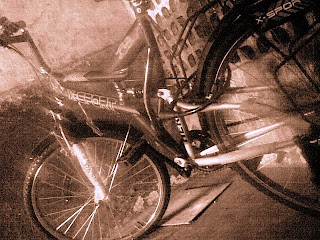
My first self bought vehicle... a cycle... my first love!

read more...
FREEDOM


A photograph I took... something to signify freedom... wide stretched arm... full of wishes... and the ability to accomplish them... 
read more...

Okay time for what i call a guest column... the following is what an uninamous freind thinks about me... and I thought I could paste it here and let you decide... 


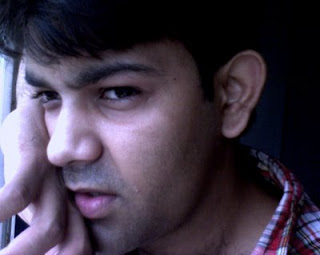
Noyon -nayan in hindi.means eyes.have u ever looked into his eyes.they speak a lot.you can see the childlike innocence in them.The angry young man heat in them.The sparkle of a diamond in them.Look at them closely the next time you meet him.


The pic-its him.unpredictable.Sometimes black, sometimes red and at other times green or yellow.You will find him laughing one moment and the other moment throwing papers around to find his fav movie cd on his not so clean desk. He will make you feel the most special person at one moment and at the other make you feel like shit.

But he is like a coconut.Hard from the exterior.Not all get to penetrate n see the softer side.And right inside is the water.The tears that roll out not so often.Only when he sees taare zameen par:)

To have him around is a blessing....................in disguise.Blessing coz he will do loads for u with the dedication that pours out of him.But in disguise coz u wont see tht dedication towards you always. Not that he doesnt have it.He would for some weird reason choose not to show it.

He will behave not in a manner that suits you.But in a manner that suits him.If u can live with that u will be happy.Else he very well knows how to make your life hell.

If given a choice he would like to still have the same life he is living but with about a 1000 things changed.Whenever you ask him he will say he is happy,but would have infinite desire for peace.

This complicated piece is a Handle with care product.And most close to him might agree with me.

If you are one of his friends for the sake of being friends [not fake,he would still go out of the way to help them] you wont really come to know 5 percent of him. And if luck favours you majorly he will let u get close to him.

And once u do.................u think if only you had a remote control to control his mood swings:)

Dont get me wrong he is not a torture all the time.
He loves puppies,beaches, songs,movies even love stories[though he might not agree upfront bout love stories] everything that a sensitive person loves.But dare you call him sensitive.He is a man.A man who is not supposed to cry.

In a nutshell a talented, highly self critical, sensitive, strong, weak, confused victim of circumstances and surroundings which moulded him into a egoistic eccentric yet focussed and lovelable person.N yet i can talk loads about him.


contributed by: THE IDIOT (that's what i have got for a name)


read more...

Monday, October 06, 2008

The Life Path


Walking the dark path

Lonely self by my side

I question why the run for so long

When it all does end with a whimper


I think about you my love

Your face like the lights in the path

You never really looked so pretty

More than beauty it brings hope

But I guess luck just eloped


So I guess I will stand lonely

None by my side

As I realize

I need to walk this lap alone

Because for a change it’s not me

But the rest who needs support 

read more...

click this!